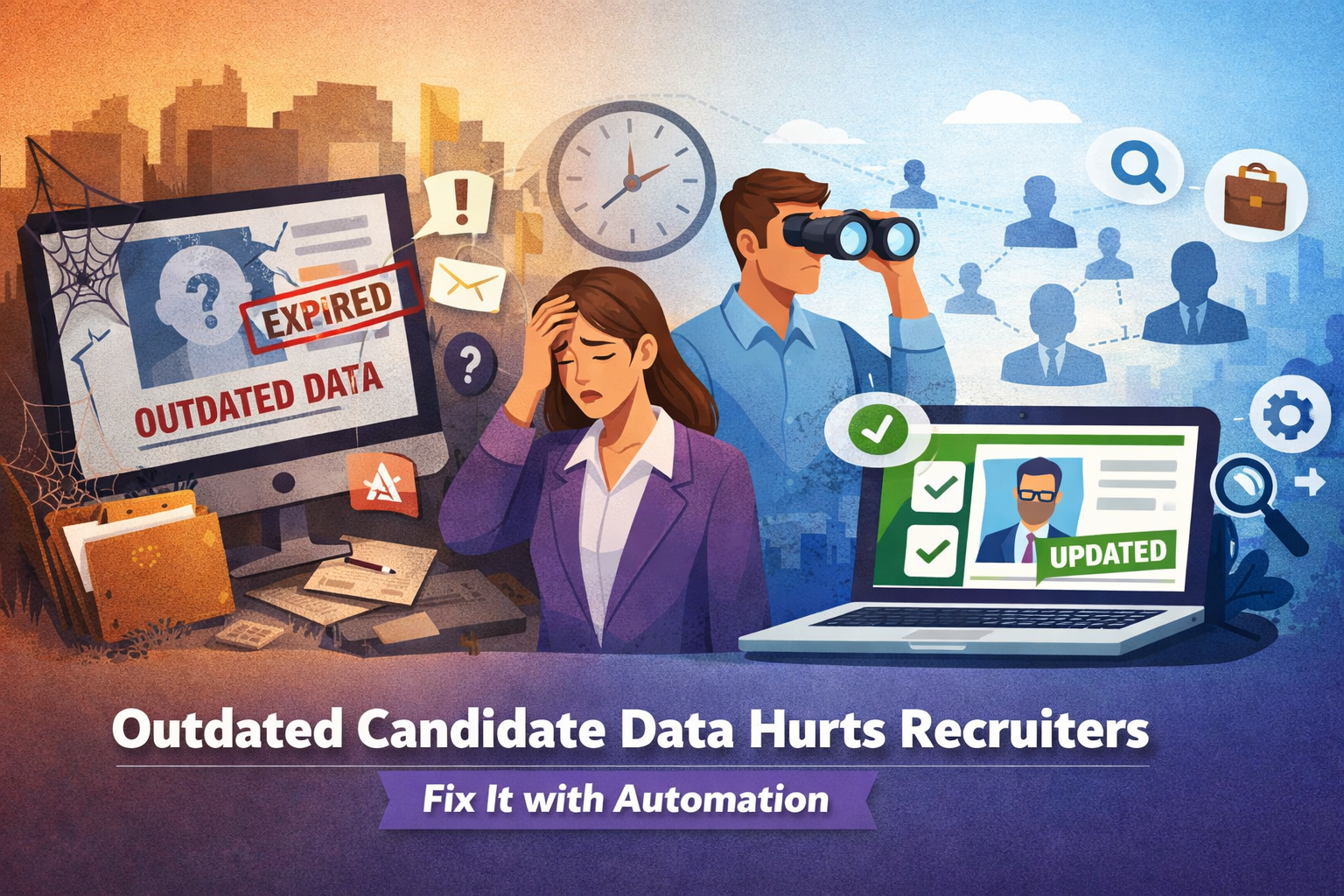
Why Outdated Candidate Data Hurts Recruiters and How to Fix It
Outdated candidate data is one of the most common hidden problems in recruitment. When candidate records are incomplete, inaccurate, or no longer current, recruiters waste time, miss qualified talent, and make slower hiring decisions.
In a market where speed and precision matter, keeping recruitment data fresh is not just a nice-to-have. It is essential for better sourcing, stronger candidate experiences, and more efficient hiring.
Here is how outdated data affects recruiters and what teams can do to prevent it.
1. Outdated Data Wastes Time and Effort
Recruiters work with large databases of candidates, prospects, and past applicants. When those records are outdated, every search becomes less reliable.
Instead of reaching the right people quickly, recruiters may spend hours contacting candidates who have changed roles, moved to another location, or are no longer open to opportunities. That means more manual work, more follow-ups, and fewer productive conversations.
2. Recruiters Miss Qualified Candidates
Stale data does not just create inefficiency. It also leads to missed hiring opportunities.
A candidate who recently gained new skills, changed industries, or moved into a more relevant role may no longer match their old profile. If a recruiter relies on outdated information, that person may never appear as a strong match, even though they are an excellent fit for the role.
In competitive hiring markets, missing high-potential candidates can delay placements and weaken the overall quality of hire.

3. Irrelevant Outreach Damages Recruiter Credibility
Recruitment is built on relevance and trust. When a candidate receives a message that clearly does not match their current role, experience, or interests, it creates friction immediately.
Irrelevant outreach can make recruiters appear careless, even when the real issue is bad data. Over time, that can harm brand perception, reduce reply rates, and make it harder to build long-term relationships with candidates and clients.

4. Poor Data Leads to Poor Hiring Decisions
Recruiters depend on data to shortlist candidates, evaluate fit, and move quickly through the hiring process. When the information is inaccurate, decision-making becomes less reliable.
Missing job changes, outdated skills, incomplete work history, or invalid contact details can all lead to weak candidate evaluations. As a result, recruiters may spend time on the wrong profiles while overlooking better ones.
The result is a slower process, lower confidence in shortlists, and a greater risk of making the wrong hire.
5. Outdated Recruitment Data Increases Hiring Costs
Bad data is expensive. When recruiters cannot trust the information in their system, they often need extra screening, more sourcing, more manual verification, and repeated outreach to fill the same role.
That added effort increases time-to-fill and raises the cost of recruitment operations. Open roles stay vacant for longer, teams lose momentum, and the organization pays more to achieve the same result.
The Real Solution: Keep Candidate Data Current
The most effective way to reduce these problems is to treat data freshness as a core part of the recruitment process.
Recruiters need systems that help them keep candidate records updated, organized, and easy to verify. When data stays current, teams can source faster, contact the right people, and make better hiring decisions with less manual effort.
Automation can play an important role here. Instead of relying on constant manual updates, recruiters can use tools like Jobin.cloud to reduce data maintenance work and improve the quality of the information they use every day.
It also helps when candidates maintain strong, up-to-date professional profiles. When recruiters and candidates both contribute to better data, matching becomes more relevant and outreach becomes more effective.
Why Accurate Candidate Data Matters More Than Ever
Modern recruiting depends on speed, personalization, and timing. None of those are possible with stale candidate records.
Accurate data helps recruiters:
- Find better-fit candidates faster
- Improve response rates with more relevant outreach
- Reduce manual admin work
- Shorten time-to-fill
- Make more confident hiring decisions
Conclusion
Outdated data creates real recruiting problems. It wastes time, hides strong candidates, weakens outreach, slows decisions, and increases hiring costs.
The fix is simple in principle: make data freshness a priority.
Recruiters who work with accurate, current candidate information are better positioned to move faster, communicate more effectively, and deliver better hiring outcomes.
Do it automatically
Jobin cloud helps recruiters reduce the burden of manual data management so they can focus on sourcing, outreach, and hiring outcomes instead of database cleanup.
By improving how candidate information is maintained and used, recruiters can work more efficiently, make better decisions, and create a better experience for the people they contact.
Candidates benefit too. Rather than re-entering the same information across multiple systems, they can focus on keeping their professional profiles current and relevant.
Better data helps everyone: recruiters get stronger visibility, candidates receive more relevant opportunities, and hiring teams work with more confidence.
FAQ
Why is outdated candidate data a problem for recruiters?
Outdated candidate data leads to wasted outreach, missed talent, slower hiring, and lower-quality decisions. It also hurts recruiter credibility when messages are no longer relevant to the candidate’s current situation.
How often should candidate data be updated?
Candidate data should be reviewed and refreshed regularly, especially for active pipelines, talent pools, and frequently searched profiles. The more dynamic the market, the more valuable regular updates become.
Can automation help keep recruitment data accurate?
Yes. Automation like Jobin.cloud can reduce manual admin work, support more consistent data maintenance, and help recruiters work from more reliable candidate records.
What is the business impact of stale recruitment data?
Stale data increases time-to-fill, adds sourcing and screening costs, and makes it harder for recruiters to engage the right candidates at the right time.
Summary
Don't let your own database sabotage you